



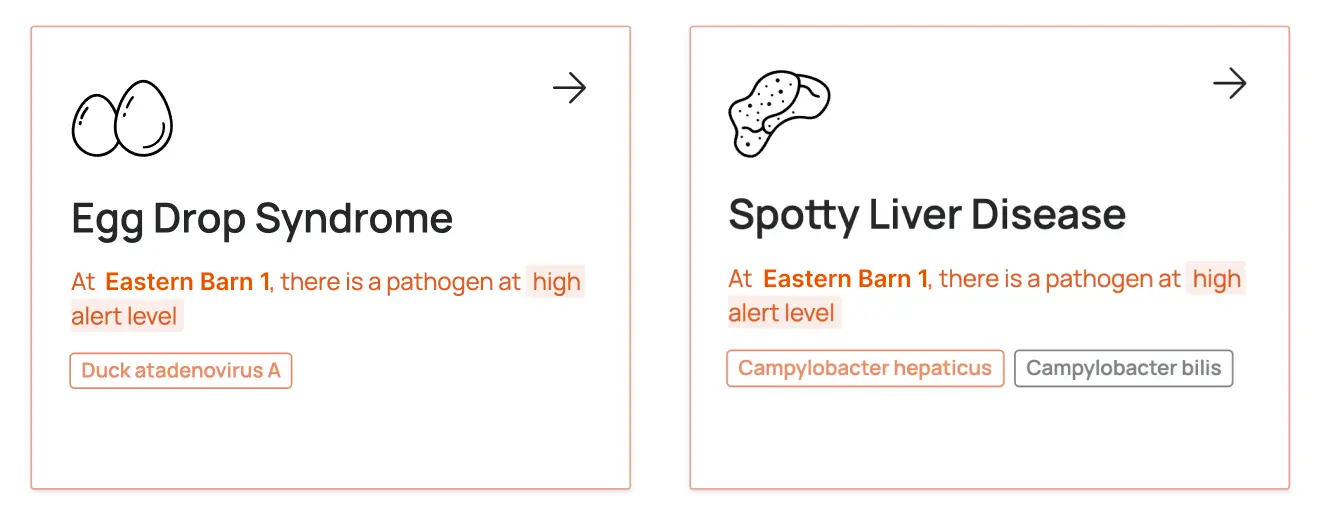
In a recent targeted investigation, we had the opportunity to trial Barnwell Bio's metagenomics platform side-by-side with traditional diagnostics during an active outbreak of Egg Drop Syndrome (EDS). The veterinarian leading the case had already confirmed EDS through clinical signs and PCR. The question they brought to us was simple: could our platform also pick up Duck adenovirus 1 (DAdV-1), the etiologic agent of EDS, directly from a boot sock sample, and could comparison with a regional control farm tell them anything additional about what was happening in the affected layer house?
Egg Drop Syndrome (EDS)
EDS is caused by Duck adenovirus 1 (DAdV-1) and primarily affects laying hens, where it produces sudden, dramatic drops in egg production along with thin-shelled or shell-less eggs. Inactivated vaccines are currently available through emergency use authorization in the United States and are typically administered intramuscularly between 8 and 12 weeks of age. The disease is relatively uncommon in well-monitored commercial flocks, and traditional diagnosis typically relies on clinical signs paired with PCR or serology.
In this case, the outbreak flock broke at 57 weeks of age. To answer the veterinarian's questions, two samples were collected: one from the affected layer house and one from a nearby, regional control farm with no clinical signs but history of an EDS outbreak in a previous flock. Both were processed through shotgun metagenomics, which sequences the full microbial population of a single boot sock swab and screens against Barnwell Bio's reference database.
What We Found in the Outbreak Sample
Duck adenovirus 1 (DAdV-1) was detected. Although the relative abundance was low, this was the first time the virus had appeared in any sample submitted to Barnwell Bio. The fact that the platform was able to pick it up at all was a strong signal, and it lined up cleanly with the PCR confirmation the veterinarian already had in hand.
But EDS wasn't the only signal the sample carried. The same boot sock surfaced two additional findings worth attention:
- Campylobacter hepaticus, the bacterium associated with Spotty Liver Disease, was also identified in the outbreak sample and triggered a high alert. Once again, the relative abundance was low, but high alert status reflects how rarely we see this pathogen in our database, which makes any presence meaningful. EDS and C. hepaticus circulating in the same flock could plausibly compound the clinical picture.
- The affected flock was also dealing with an ongoing mite infestation. While the veterinarian awaited species confirmation by traditional parasite identification methods, our platform classified the detection as Northern fowl mite (Ornithonyssus sylviarum). Mite detection is a new focus area for us, so we are working with the veterinarian to better understand how our detection aligns with traditional identification methods. Either way, the signal lined up with what was happening in the barn.
What We Found in the Control Sample
The regional control sample tested negative for DAdV-1, C. hepaticus, and Northern fowl mites, confirming that the findings in the affected flock weren't an artifact of environmental contamination or a regional background signal. The absence of EDS at this nearby flock also served as a useful surveillance approach for a newly placed flock in an area where EDS had been detected.
The sample wasn't entirely quiet, though. It carried a medium alert for E. coli, with a 13.5% relative abundance, which is elevated compared to typical baseline in a poultry flock. The flock had been placed recently, and the producer was interested in obtaining a baseline sample to confirm elimination of infectious agents from the previous flock through cleaning and disinfection. The data suggested that E. coli may be worth keeping an eye on under these particular conditions.
Why the Comparison Mattered
Looking at the two flocks side by side moved the discussion past a single diagnosis. It surfaced the kinds of questions that drive ongoing flock health decisions: what is contributing to disease, what isn't being adequately controlled, and where should the producer and the vet focus their attention.
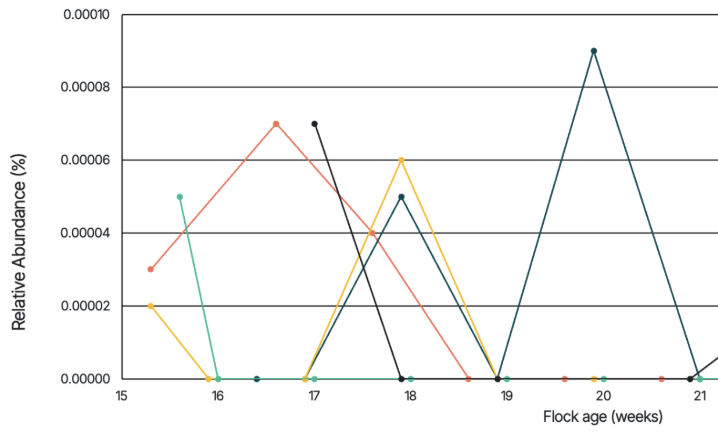
That same kind of view, applied over time, can also support more proactive flock health management. Repeated sampling across flocks and barns can help identify pathogen pressure as it builds, flagging changes early enough to adjust biosecurity, treatment, or management practices before clinical signs are identified. When proactive monitoring is applied across flocks, the data can also inform vaccination strategy by showing which pathogens are actually circulating, when they tend to appear, and whether current vaccination programs match the disease pressure on the farm.
The affected flock in this case had been diagnosed with EDS; with longitudinal data, a veterinarian could begin to evaluate whether the timing of infection aligns with disease dynamics actually showing up in the barns. Surveillance and early detection of EDS in outbreak areas may facilitate regional control of this disease.
If you have a clinical question on one of your operations, or want to explore how whole-microbiome sampling could support your surveillance or vaccination strategy, reach out to us at hello@barnwellbio.com.
.jpg)

.jpg)
.jpg)
