



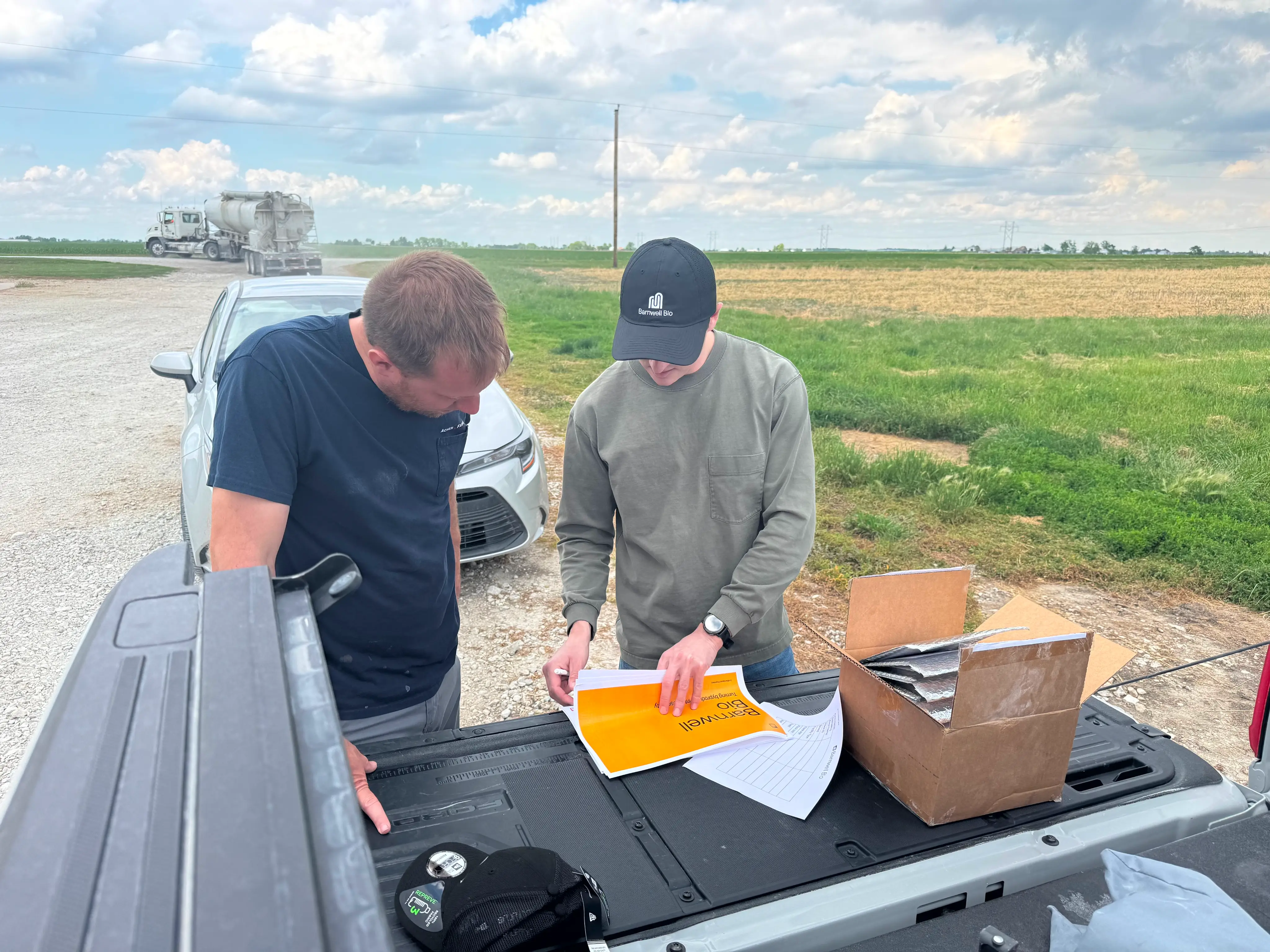
A common refrain we hear is that the agriculture sector is not quick to take up innovation. In our experience, that could not be further from the truth. Our work with Achen Farms is a perfect example of why we believe the production agriculture sector is one of the most exciting areas to be building a company.
Some of the very first samples we ever collected were from Achen Farms, a family-run independent turkey grower based in Iowa who is part of West Liberty Foods. The farm owner Jared Achen is a 4th-generation producer, who is also an entrepreneur himself. That combination - deep roots in the farm and a willingness to try something new - is exactly the kind of partner that helps a young company figure out what it's actually building.
We were connected through our friends at AgVentures Alliance. Jared is a member and was willing to work with us to help us understand how the product would work in the field, what needed to be improved, and how we could create something to help producers better understand animal health. For a startup still in its earliest stages, that kind of access and candor is not something you can take for granted.
Our experience at Achen Farms was foundational to what we've built today. Through this work, we've taken away a few key lessons that continue to drive how we do business every day at Barnwell Bio.
Listen to Your Users
We had the first version of the product in hand when we started working with Achen Farms. One of the things we asked Jared upfront was to give us any feedback, good and bad, as he started using it. We wanted the unfiltered version.
A key example emerged quickly. When we started, our sample turnaround time was about two weeks. That felt reasonable when benchmarked against metagenomics workflows broadly, but that framing didn't matter to a producer managing a flock with a potential health challenge developing in real time. In some situations, two weeks is simply too long to wait. That feedback became an operational priority for us, and we got that turnaround time down to as little as a week. Beyond making us best-in-class for the type of sequencing we're doing, faster results mean producers can act on the data while it still matters.
We knew turnaround time was going to be important. But hearing the specific reason why, directly from someone whose livelihood depends on getting it right, brought the urgency to life. When you're bringing a new technology to market, humility matters. The product you think you've built is not always the product your customer needs, and the sooner you close that gap, the better.
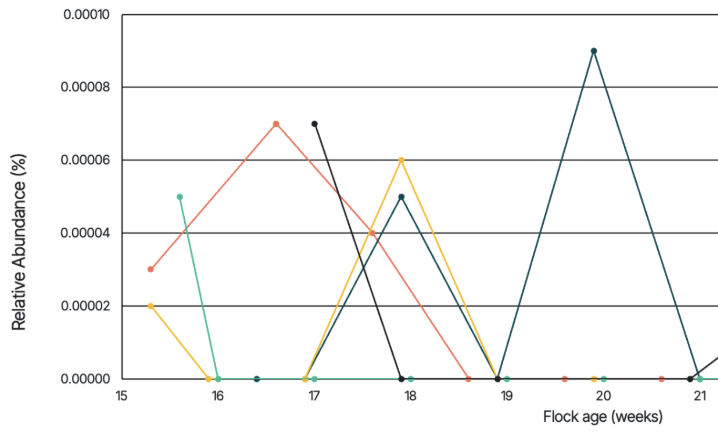
Listening also meant paying attention to the questions producers asked after we delivered results. Detection was the starting point, but Jared and his team wanted to know whether the actions they took actually moved the needle. That pushed us to run a study at the farm looking at how an ammonia control additive affected pathogenic and beneficial bacteria levels over time. The results showed that the product worked relatively well in keeping the beneficial bacteria elevated, and the pathogenic ones at bay. This seems to last until almost the end of the turkey growout, when that dynamic switched. It was a reminder that the value isn't just in spotting a problem; it's in giving producers a way to see whether their response is working. That kind of question, "did the thing I did help?" is one we now build for directly.

Showing Up Matters
Every farm is a little bit (and sometimes a lot of bit) different. Housing structures, management styles, and location-specific weather patterns are just some of the variables that can ultimately affect disease pressure for a given flock. There is no substitute for seeing that variability up close, and sometimes that has big implications for how we interpret our data. Jared was nice enough to welcome us onto his operation so we could see exactly where we would be collecting the samples.
The visit was practically useful for product development, too. Are the barns spread far apart across the property? Will that make sample collection harder to standardize? Where's the most practical place to drop samples for shipping? These might sound like small details, but building a product from the ground up is a series of many, many small decisions - and getting a visceral, on-the-ground understanding of those questions helps us make more customer-centric choices at every step. You don't get that from a Zoom call. We make it a point to try and visit producers as often as possible, especially when we’re getting started with folks.
Work with Good People
Building a company and ramping up a new product is hard work. What makes it a little easier is doing that work alongside genuinely good people. Jared and his veterinarian Dr. Elizabeth Beilke both exemplify this. They are curious, intentional, and focused on outcomes that can support not just their own operation, but the broader industry. They've been generous with their time from day one - and they've been incredible advocates for our work, even back when we were still working through the early kinks.
That kind of partnership is rare, and we don't take it lightly. The best early customers aren't just buyers, they're collaborators. They push you to build something better than you would have on your own.
That collaborative spirit shapes who we bring onto the Barnwell Bio team, too. We hire people who are capable, adaptable, and humble. Our team is excited about challenges but not daunted by them, and most importantly love connecting with our customers to hear straight from them how we can better serve them.
At Barnwell Bio, we think about producers like Jared often when we make decisions. The innovation happening in production agriculture is all over, being driven by producers who are asking hard questions and expecting real answers. We're just working hard to keep up.
.jpg)

.jpg)
.jpg)
