




Three barns. Same complex. Many similarities, but a few key differences. Just looking at the birds, you may not expect three houses to tell such different stories.
Barnwell Bio monitored three commercial barns on a Northeast layer complex, collecting weekly samples from placement through approximately peak lay. We tracked the relative abundance of key microbial genera alongside production metrics and management records - feed changes, supplements, treatments, and other noteworthy events.
What the data showed
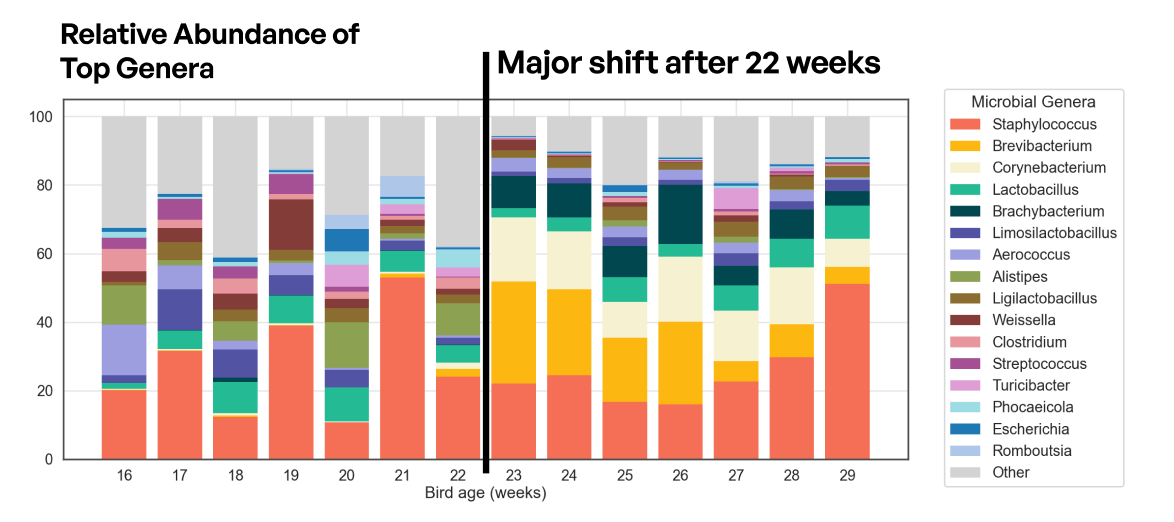
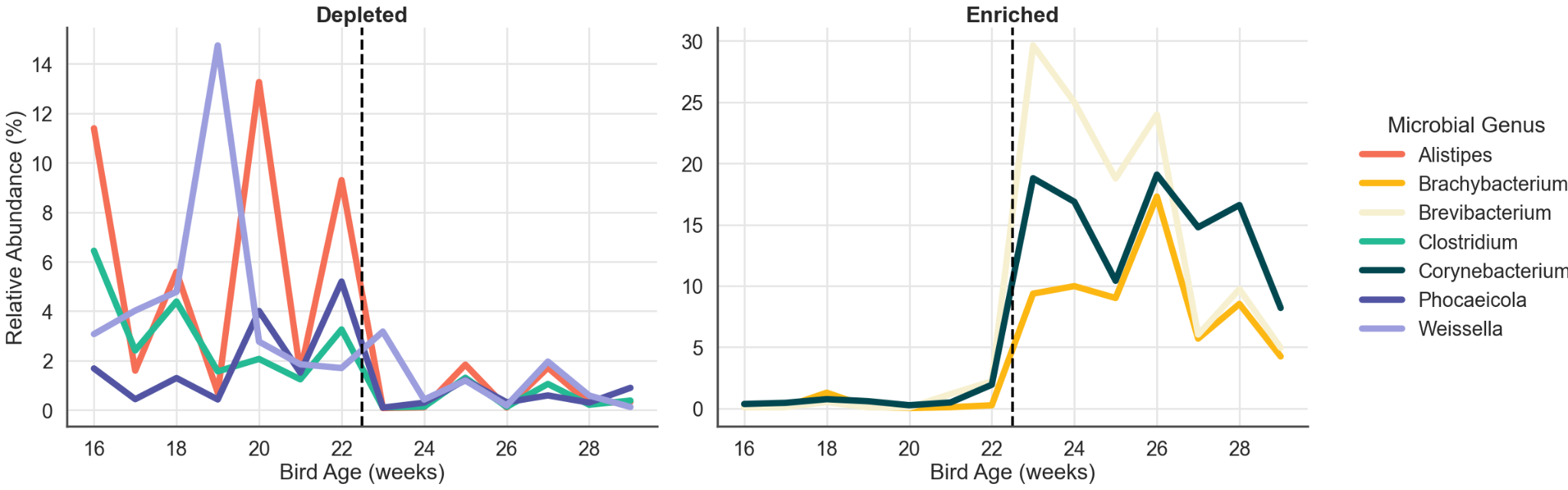
In all three houses, the microbiome followed a predictable development pattern until week 22. In the third house, there was a shift at this point - a noticeable change that stood out immediately in the data. Certain genera associated with positive production outcomes, like Alistipes and Weissella, decreased in relative abundance. And genera associated with worse production outcomes in the literature, like Brevibacterium, Brachybacterium and Corynebacterium, increased.
Isolating the cause
We cross-referenced everything that changed across all three houses during that window. Feed additives, ventilation, vaccination events - the producer was generous in sharing the full management context. Almost everything was consistent across all three houses.
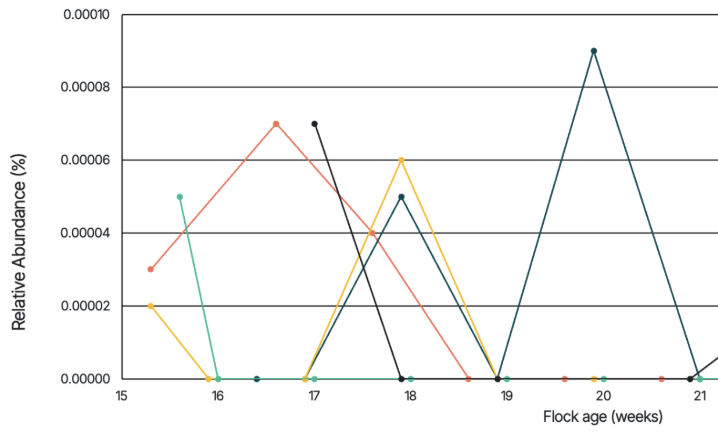
There was a noticeable exception: a copper sulfate treatment administered to house three only, around week 22, in response to crop mycosis in the flock. (Worth noting: we actually detected signs of the infection in the microbiome data three weeks before symptoms were visible. More on that here.)
Copper sulfate is a powerful tool against bacterial and fungal issues, but as a broad-spectrum antimicrobial, it can affect the good bacteria alongside the bad.
What this means for producers
Producers are aware of the tradeoffs that come with a strong antimicrobial treatment. What's harder to know is what's specifically happening in the birds, how long the impact lasts, and what to do about it. Microbiome data can make that picture a lot clearer.
When flock health calls for a treatment like copper sulfate, pairing it with a probiotic supplement could help buffer the microbiome impact and support gut stability through the disruption.
What continuous monitoring enables
Metagenomics-based monitoring gives producers barn-specific, longitudinal visibility. By monitoring multiple barns in the same complex, we can untangle what might not otherwise be obvious - what, across all the variables of environment, bird age, and management, is actually driving outcomes in a particular flock? It can help uncover what may be an unforeseen impact of a treatment or intervention and provide the information required to course-correct if and when it’s needed. Reach out to us at hello@barnwellbio.com if this sounds like something that would be useful to you!
.jpg)

.jpg)
.jpg)
