



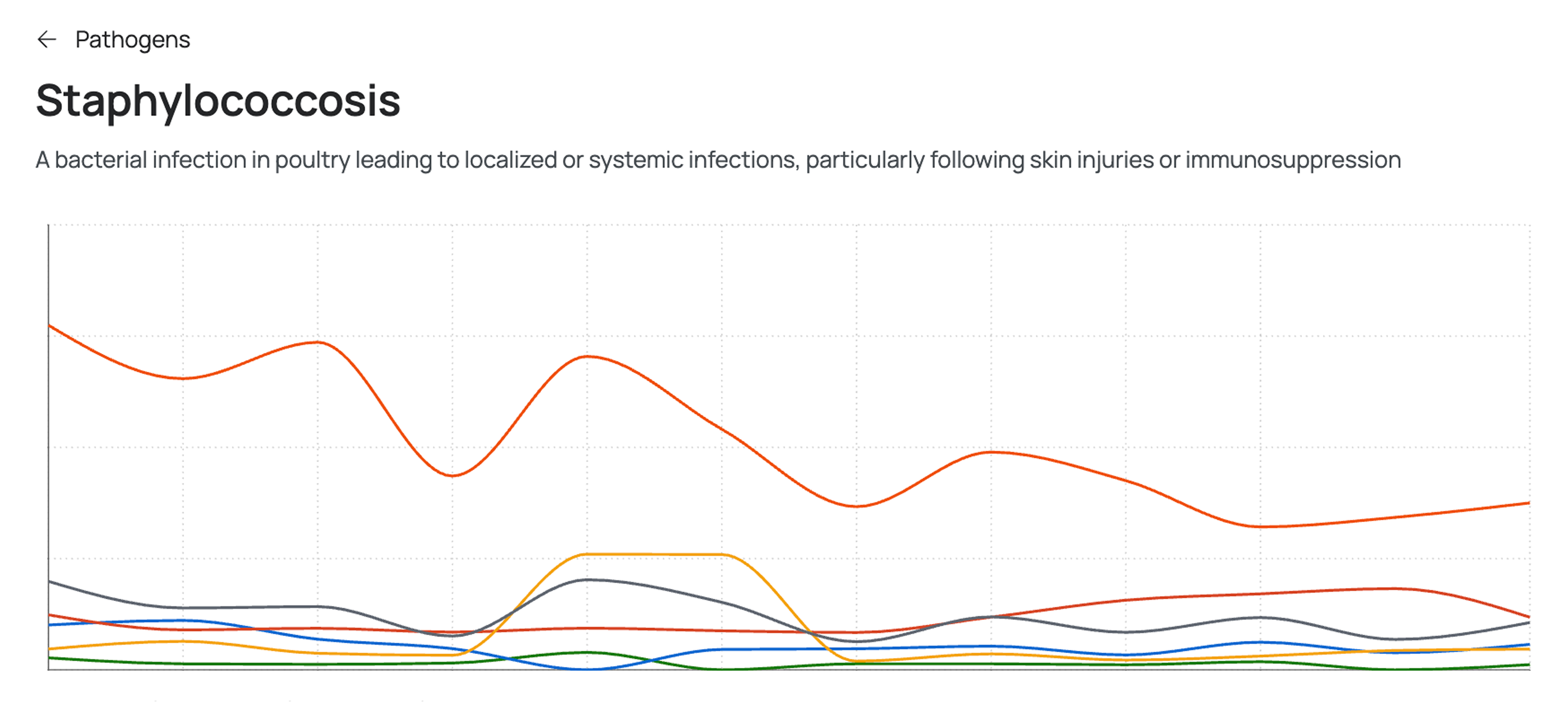
Along with the early detection use case, like we discussed in our previous blog post, another powerful way Barnwell’s platform can be leveraged is through monitoring the impact of treatments and interventions. Jake, our Chief Scientific Officer, likes to say - using traditional diagnostics can feel like looking through a keyhole, whereas we can provide the whole picture.
A great example of this comes from our work with Amick Farms - our data provided enough information for Dr. Jason Sousa to be able to determine the optimal use case for a product he was trying out, and it was somewhat unexpected!
Staff veterinarian Dr. Sousa and Amick Farms became valuable partners when we connected with them about their recurrent Focal Ulcerative Dermatitis Syndrome (FUDS) challenges across breeder farms. The effectiveness of traditional antibiotic treatments was proving limited, and the team wanted to understand why some houses were affected by FUDS while others on the same farms remained healthy. Ultimately, our goal is to determine whether early warning signals can be detected in the barn microbiome before clinical symptoms develop, typically around 40-48 weeks.
However, as mentioned above, another use case we’re exploring with the team at Amick is intervention monitoring - can we provide precision guidance on how specific probiotics and treatments perform in their barns?
The first intervention assessed was a litter amendment applied in a barn prior to bird placement. Barnwell’s monitoring clearly detected an increased abundance of the species that make up the additive five days after application. However, the effect was not persistent - by the next sample, taken a week later, the levels of beneficial bacteria had returned to baseline.
Interestingly, we also observed an unexpected effect. While the product was not marketed to reduce Staphylococcus levels - the primary advertised targets were E. coli and coliforms - our monitoring revealed a meaningful reduction in Staph levels lasting approximately one week.
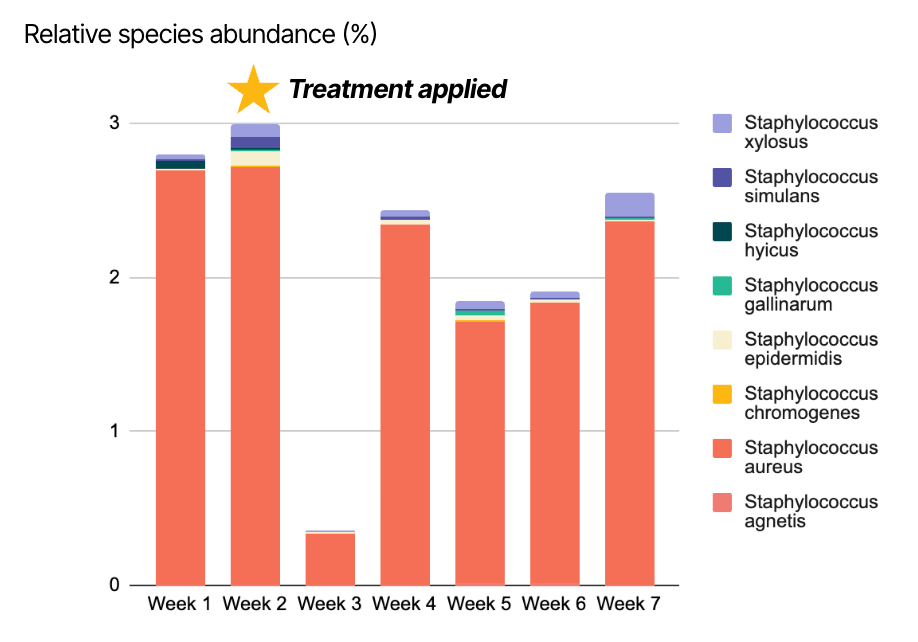
This finding sparked an idea from Dr. Sousa: the amendment could be applied proactively in pullet houses ahead of high-stress vaccination periods. He aims to evaluate its ability to reduce the incidence of Staphylococcal arthritis and tenosynovitis.
We’re eager to see how the trial unfolds and are excited to see such a clear, real-world application of the data. Ultimately, our goal is to help producers understand how treatments perform within their own operations so they can maximize return on investment.
For example, a modest improvement in the vaccination efficacy - decreasing mortality rates by just 1% and increasing future egg production by ~5 eggs per bird - would generate nearly $100,000 in additional revenue for a 12,000-bird pullet flock. This demonstrates how complete barn-level microbiome data can have a meaningful and measurable impact on both flock health and farm profitability.
.jpg)

.jpg)
.jpg)
