



.webp)
Hey Barnwell Community,
One of the most important features of our approach to generating unique metagenomic data is how we think about sample collection and strategy. We are collecting non-invasive, population-level samples that provide animal health insights on an entire barn, so let's break that down…
First, the non-invasive piece. Traditional disease surveillance via diagnostics (posting birds, targeted testing) has long been the backbone of poultry health management, and for good reason: it often delivers precise, confirmatory results that are essential for diagnosis and treatment decisions. What we've added to the toolkit is an environmental sampling approach that collects from the barn floor, giving producers comprehensive pathogen data (anything that leaves a DNA footprint) without handling individual birds (well, unless they start to peck at your legs as you walk through…but that is their choice!).
This complements traditional methods by providing frequent, low-disruption monitoring that preserves animal welfare and reduces the labor burden on farm staff. Think of it as an early warning layer that helps producers know when and how to deploy targeted diagnostics most effectively.
Second, the population-level coverage. Posting a single bird or collecting swabs from a handful of individuals is an important part of any diagnostic workup, but as a surveillance strategy, it can be challenging to ensure you're capturing what's circulating across an entire house. If that bird happens to not be shedding the pathogen of concern, or the sample is collected at the wrong moment, an emerging threat can go undetected — even if infection is spreading. Our barn-level samples capture genetic material from thousands of birds simultaneously, adding a population-wide lens that complements the precision of individual bird testing.
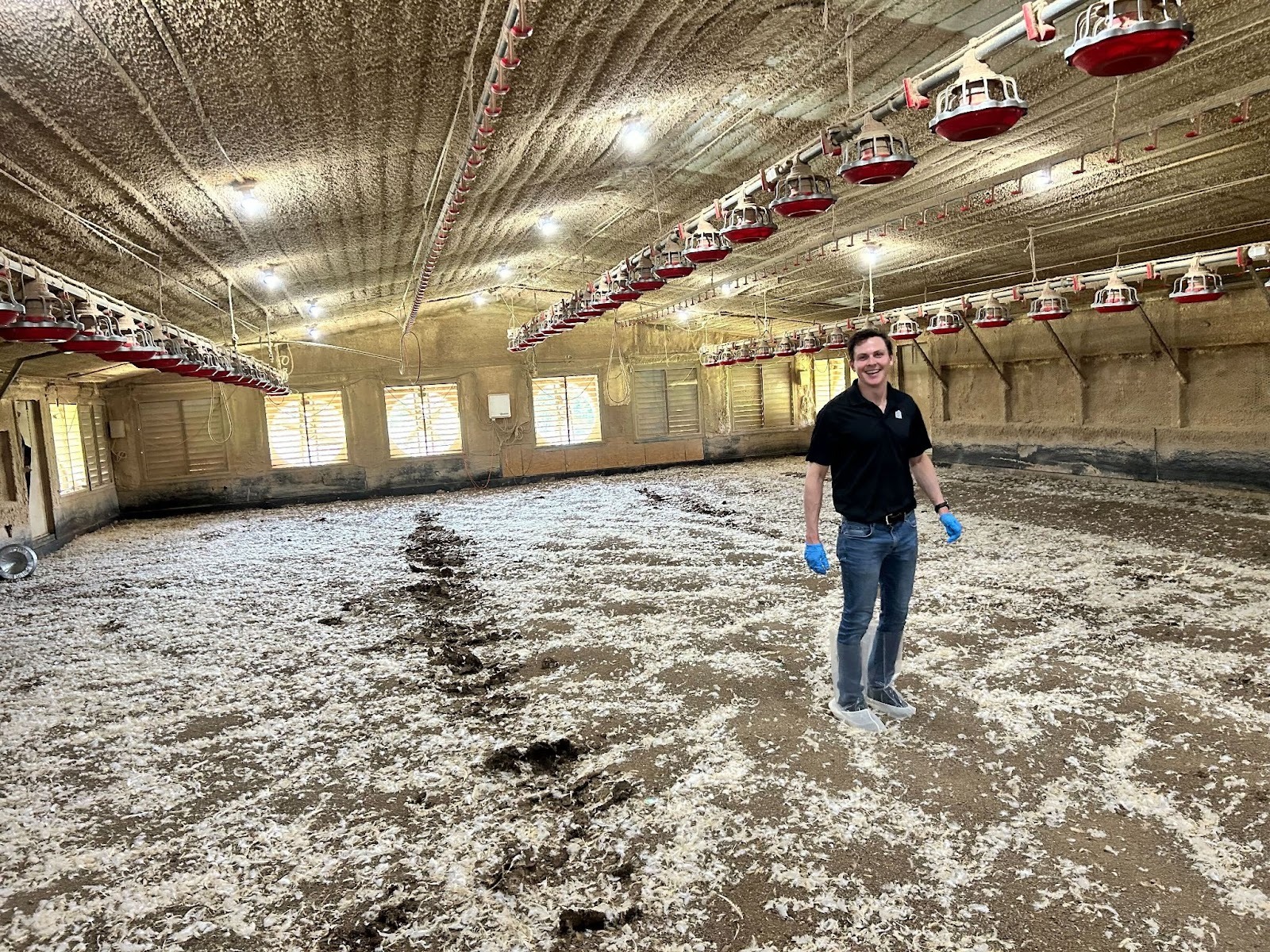
Sampling a house with boot sock swabs in between flocks
Some data from our partnership with Mississippi State University illustrates how these approaches work together. Our metagenomic data flagged an Enterococcus cecorum signal, and 14 days later, the birds started showing symptoms of kinky back. When the farm performed confirmatory clinical sampling on posted birds that had clear symptoms, the PCR results came back negative in one of the houses.
Weekly, non-invasive sampling at Mississippi State broiler farm
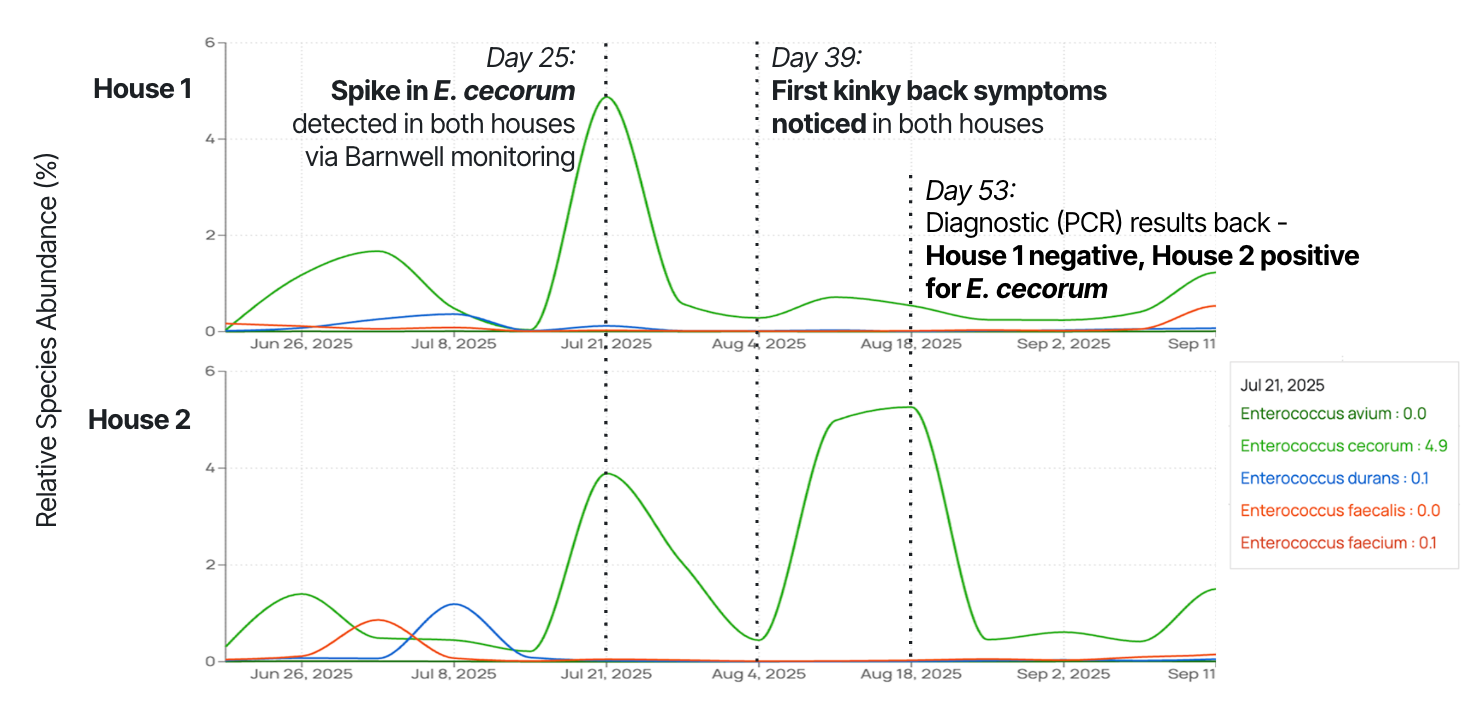
Why? It's hard to say for sure, but perhaps they happened to select a bird that wasn't actively shedding at that moment. Our population-level sample had already captured the broader picture: there was an emerging threat in that barn. This is a good example of why pairing population-level surveillance with individual diagnostics gives you a more complete view of flock health.
Traditional diagnostics remain essential, as they deliver the confirmatory, pathogen-specific answers that drive treatment decisions. Non-invasive, population-level surveillance adds an upstream layer that helps producers identify threats earlier and deploy those diagnostic resources and other interventions more strategically. Together, they give you better data to make faster, more informed decisions about flock health.
.jpg)

.jpg)
.jpg)
