Escherichia coli (E. coli) is everywhere, and in most cases, it is not a problem. This bacterium naturally lives in the intestinal tract of humans and animals and is routinely found in the environment. Because it survives well across a wide range of conditions, E. coli is one of the most ubiquitous bacteria in livestock and poultry production. In many cases, these bacteria are harmless and even beneficial, playing an important role in normal gut health and digestion.
The challenge is that not all E. coli behave the same way. Some strains carry virulence genes that enable them to evade host defenses, invade tissues, and damage host cells, ultimately causing disease. A well-known example is Escherichia coli O157:H7, a Shiga toxin–producing strain that can cause severe foodborne illness in people.
In poultry, disease-causing strains are referred to as Avian Pathogenic Escherichia coli (APEC). Unlike commensal strains that remain in the gut, due to virulence factors, APEC can move beyond the intestine, invade other tissues, and cause systemic infection. When this happens, the disease is called colibacillosis. Clinical signs are often broad and non-specific because multiple organs may be affected. It affects birds across ages and production systems and is one of the most common bacterial diseases in commercial poultry worldwide. High mortality, reduced growth rates, poor feed conversion, and increased treatment and management inputs make colibacillosis a costly challenge for producers, and we’ve heard this from our own customers!
A Constant Challenge with Unclear Answers
When we talk with clients across different poultry sectors, APEC consistently comes up as one of their most persistent health challenges. For many producers, it is not always a dramatic outbreak, but rather a chronic issue marked by increased mortality, inconsistent respiratory signs, and reduced flock performance over time. In many cases, they strongly suspect APEC is involved, but the best path forward for managing the problem is not always clear.
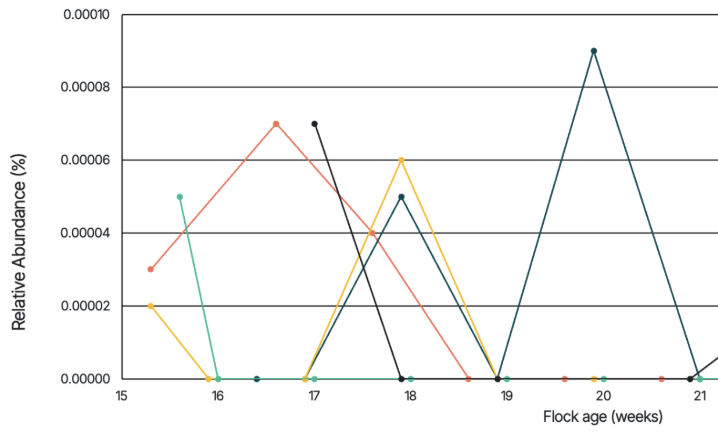
We also see this complexity reflected in the field through our current data. For example, on one turkey operation we are working with, mortality patterns initially suggested APEC involvement, yet the underlying drivers remain unclear. While APEC is likely contributing, it is difficult to determine whether it is the primary cause of the clinical signs or acting opportunistically in response to other ongoing disease processes or flock-level stressors.
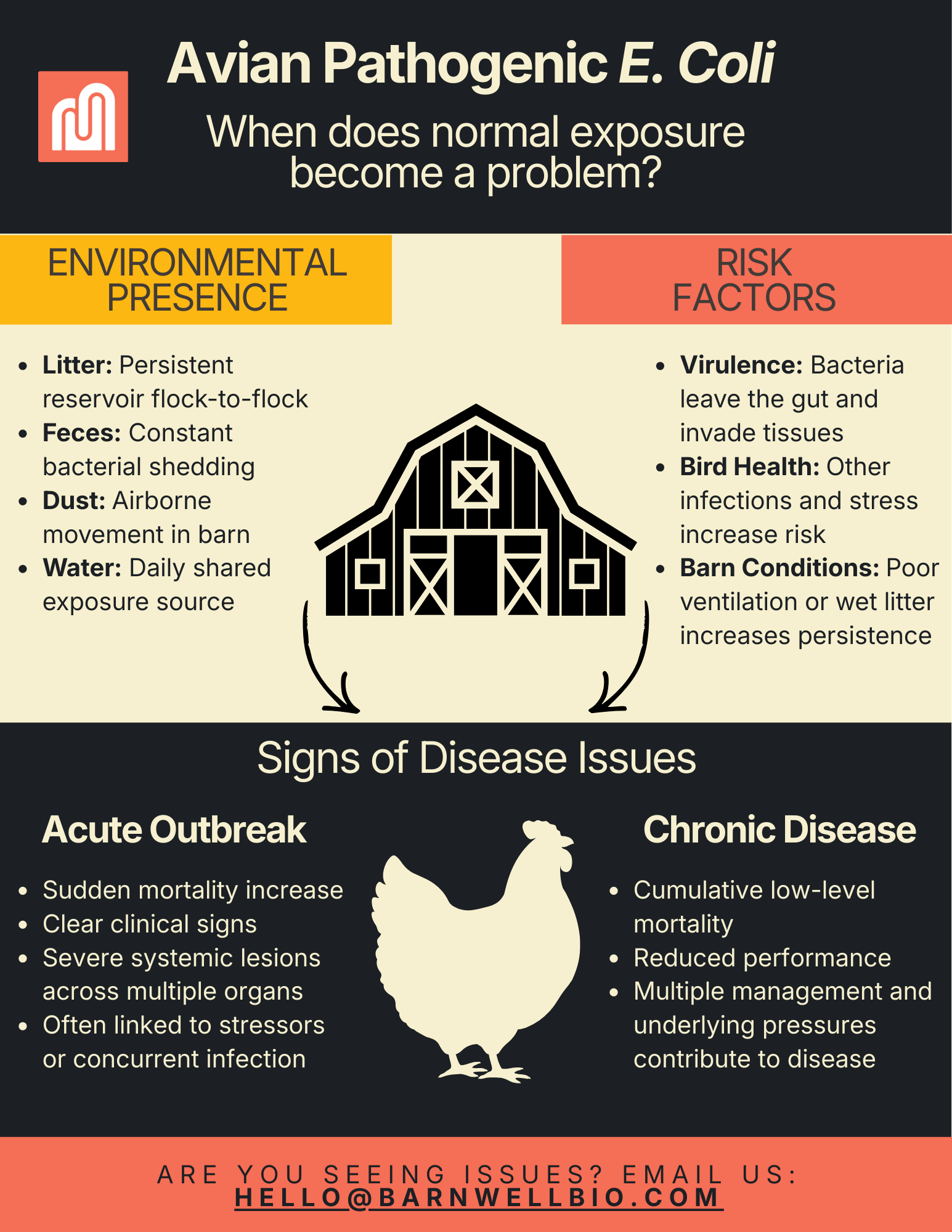
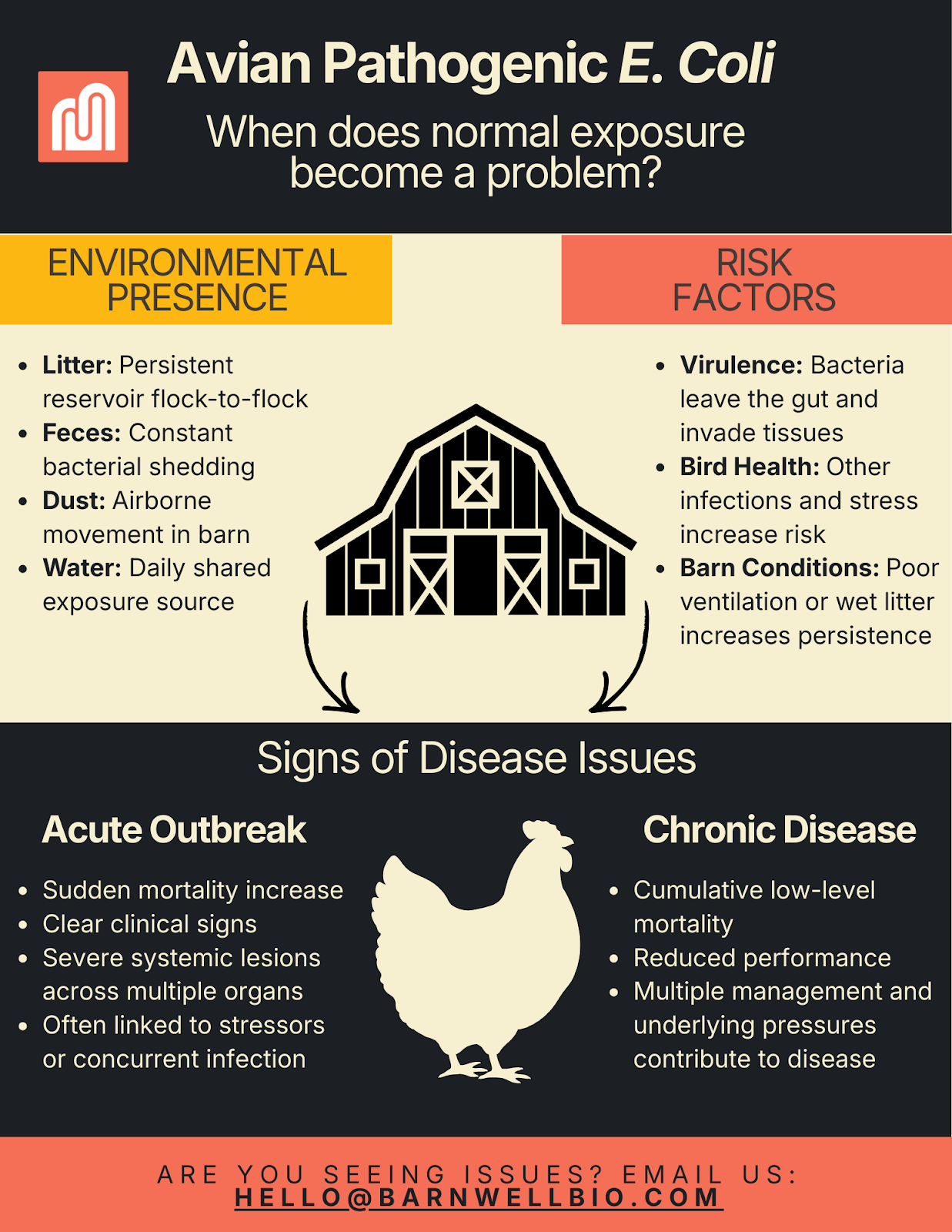
And it is that problem that makes APEC so difficult to control. It is everywhere in the environment, and we don’t always know which strains are pathogenic until birds begin showing signs of disease. The bacteria are routinely found in litter, feces, dust, and water within poultry houses. In many cases, low-level exposure combined with strong management may never lead to noticeable disease. However, when birds experience additional health challenges or stress, APEC can quickly take advantage of weakened defenses and contribute to illness.
This opportunistic nature means that E. coli is often involved in secondary infections following respiratory disease or environmental stress. For example, respiratory irritation caused by dust, ammonia, or viral infections such as avian metapneumovirus (aMPV) can damage the respiratory tract and create an entry point for bacteria. In these situations, E. coli may infect a wide variety of internal organs, leading to airsacculitis, pericarditis, septicemia, and other systemic lesions.
Although dramatic outbreaks of E. coli still occur, it can also present as a chronic, ongoing issue. Increased use of tools such as vaccination, feed additives, and litter amendments have helped limit severe outbreaks in many flocks. However, E. coli continues to contribute to low-level mortality and reduced productivity that adds up over time. Birds may present with septicemia, salpingitis, or less specific inflammatory lesions that individually seem minor, but collectively represent substantial health and economic losses over the life of a flock.
Additionally, the presence of APEC alone does not always explain disease. E. coli can often be isolated from healthy birds, which means finding the bacteria does not confirm it is the primary cause of a problem. In many cases, disease develops when the right strain is present and birds are simultaneously dealing with immune suppression, poor air quality, temperature stress, or concurrent infections. This makes diagnosis challenging because colibacillosis is often the result of multiple factors lining up at the same time rather than a single pathogen acting alone.
That is why when E. coli becomes a flock issue, the most important question is often not simply which bacteria are present, but what conditions allowed them to become a problem. Ventilation, litter moisture, water quality, stocking density, and underlying respiratory health all influence whether exposure may turn into a costly production challenge.
Because of its opportunistic and often chronic nature, along with the many factors that influence when disease develops, E. coli remains a costly challenge that requires strong management practices focused not only on reducing bacterial pressure, but also on identifying the conditions that allow APEC to thrive. Chronic flock losses often develop quietly over time, which makes surveillance essential, because you can’t manage what you don’t measure. Stay tuned for future blogs exploring how Barnwell Bio is applying longitudinal on-farm monitoring to help identify patterns earlier and support practical management decisions related to APEC.


.jpg)