
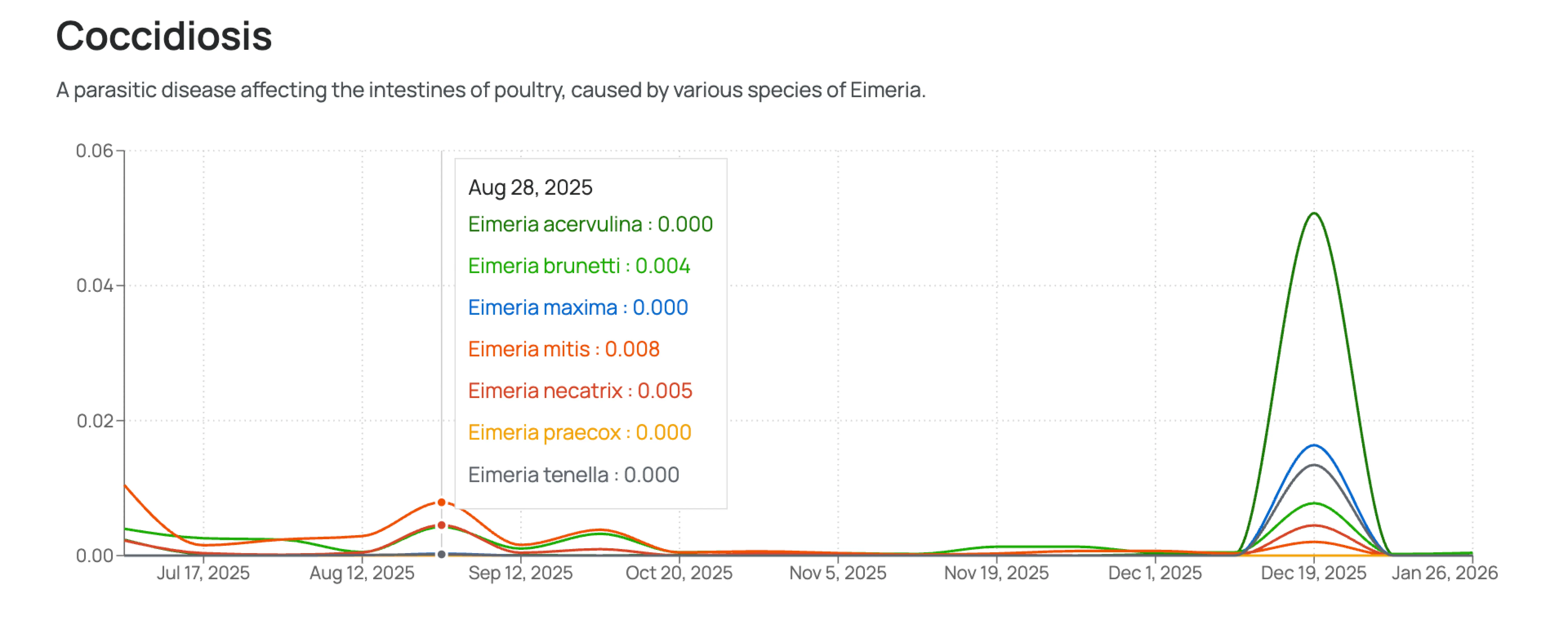
A major theme we’ve been hearing a lot about recently is strong interest in being able to tell the difference between wild type and vaccine strains of coccidia. After talking to producers, vets, and folks at animal health companies, it's clear this ability is extremely valuable for all stakeholders. Here's what we've learned about why both sides of the industry are paying attention.
What Producers and Their Vets Really Want
This information could be transformative for producers trying to get ahead of coccidiosis management. We learned from farm veterinarians that when vaccine-type strains dominate a particular house, it's a strong signal that the vaccination program is working as intended - the live vaccine is cycling and establishing competitive exclusion against more pathogenic field strains.
Having strain-level data could meaningfully support proactive management. For example, if an unexpected non-vaccine strain begins to emerge, that's an early signal to consider introducing an alternative vaccine or updating your program before clinical problems worsen. If strain data suggests levels beyond what's expected from normal vaccine cycling, a possible sign of vaccine escape, that could also mean you want to be prepared for a potential intervention, like re-applying the vaccine or using a coccidiostat "shuttle" program.
In an era where any sign of performance issue could trigger HPAI anxiety, having data that points toward a known, manageable cause like coccidiosis is genuinely reassuring - it's one less unknown, and it gives producers and veterinarians a clear path forward.
What Animal Health Companies Are After
For vaccine manufacturers, this technology is like having a window into what's actually happening with their products in the real world. Experts have indicated that vaccine strains escape up to 10% of the time and can lead to full-blown coccidiosis. Being able to track when and where this happens could give companies crucial data for improving their research, development, and manufacturing processes.
We’ve also heard there can be a regional challenge when it comes to effectiveness. Certain strains could be different regionally, and sometimes vaccine batches just don't work as expected. Strain differentiation lets companies validate that their products are performing consistently and identify when they need to adjust formulations for different markets.
Why This Matters Right Now
This has clearly been a pressing issue for a while. As the industry moves towards more precision-level interventions, there’s a lot of value in having barn-level cocci species and strain data.
What's exciting is that this can create a win-win situation. Producers get the data they need to optimize their programs and have more effective coccidiosis management. Allied industry can get the field performance data they need to validate their claims and improve their products. It's the kind of technology that makes both sides of the industry partnership stronger, which doesn't happen every day.
And where Barnwell fits in - well that’s for the next blog in this series!

.jpg)
.jpg)