.jpg)
In our last post, we walked through how we built a small study to test every step of one producer's between-flock program: windrowing and flame sanitation, a probiotic, and litter amendments, each bracketed by sampling in both houses. Here's what that data showed, and how it helped shape the conversations happening between the producer and their veterinarian.
What Each Step Actually Did to the Litter
Diversity declined steadily with each cleaning step, which is expected and is a sign that cleaning and disinfection was doing its job. However, it opened room for an opportunistic organism. Staphylococcus nepalensis relative abundance increased following each step, reaching more than half of the community following the litter amendment application, in both houses (see chart below).
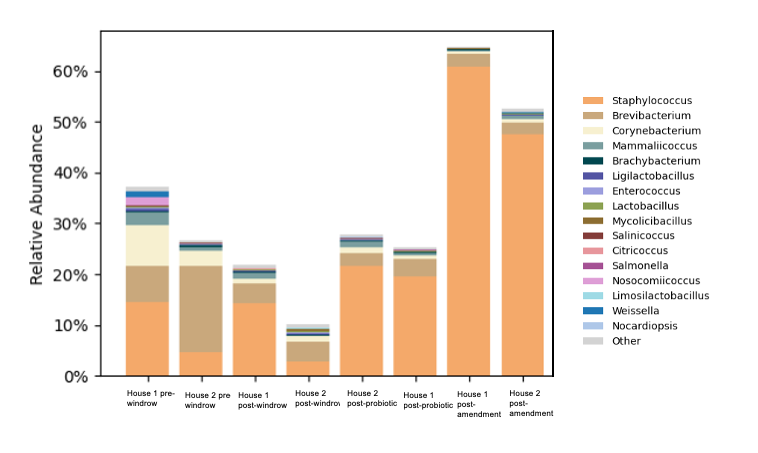
Key Information Identified through Each Testing Timepoint
The two houses, treated with different litter amendment combinations, ended up looking very similar by the post-amendment sample. Both samples were dominated by Staphyloccocus nepalensis, and there were no identifiable differences in the microbiome between the two products.
The probiotic showed no clear sign of establishment in the litter either. Applied right after disinfecting feed and starter pans, and right before the next round of amendments, it likely never had time to take hold before being outcompeted. Going forward, we recommended applying it closer to bird placement, with more separation from any disinfectants or amendments.
Most notably, none of the organisms tied to this operation's past problem flocks showed up as elevated. If the litter itself were seeding these recurring problems in the birds, we'd expect to see the causative agents.
What This Means Going Forward
Taken together, the sequential sampling of litter management and the historical production data painted a clear picture: the litter does not appear to be the primary driver of this operation's increased mortality. The high first-week mortality is more likely due to an early-life issue, such as yolk sac infection, rather than something originating in the barn itself.
Barnwell Bio's testing gave the producer a clearer, evidence-based picture of how their litter management strategies were directly impacting the microbiome and helped rule out the litter as the primary cause of the increased mortality.
It also gave the producer a better understanding of how each product was performing on her operation. Going forward, instead of stacking disinfectants, amendments, and a probiotic into a tight sequence to cover every base, we recommended narrowing the program to one cleaning and disinfection method and one litter amendment, followed by a probiotic applied a couple of days before placement, giving each product the time it needs to work, and help keep things cost effective. As this producer said, “your testing definitely was an eye opener for me on how to save money.”
Ultimately, the data and actionable insights provided by Barnwell Bio helped the producer better understand where to spend her precious time and money. If you're trying to figure out whether it's the litter, the birds, or something in between, reach out to us at hello@barnwellbio.com.


.jpg)