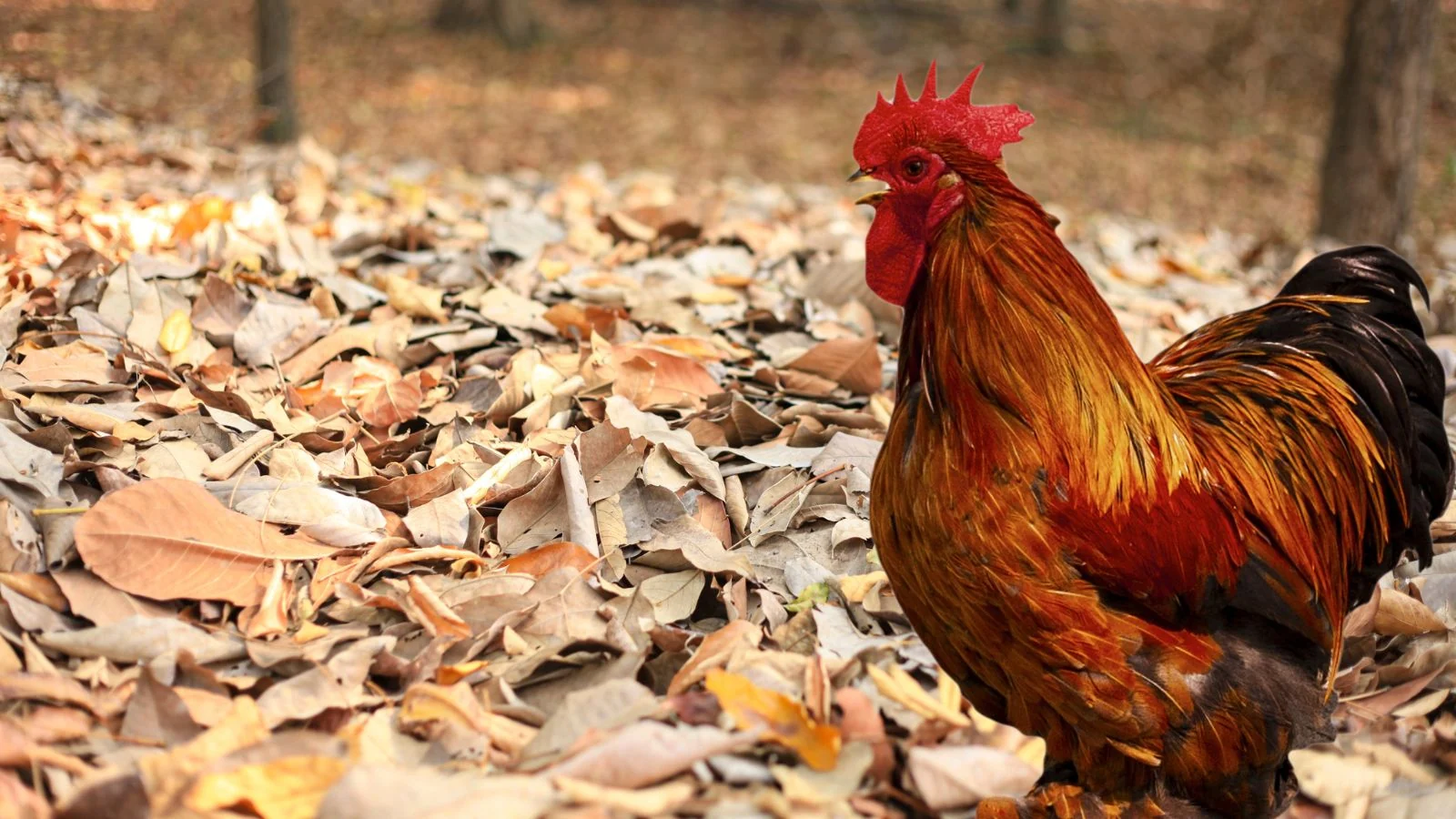
Fall brings predators closer to the barn, rodents inside it, and migrating wild birds overhead. Young predators are dispersing and looking for easy meals, raccoons are fattening up for winter, and waterfowl migration peaks in October and November. At the same time, rodents are moving into barns as fields are harvested and temperatures drop.
Over the past month, farms undergoing proactive surveillance with Barnwell Bio have shown an increase in Pasteurella multocida, and rodent-associated bacteria. Poultry producers should watch for these, plus a few other disease risks that tend to rise this time of year. Here’s what to keep in mind:
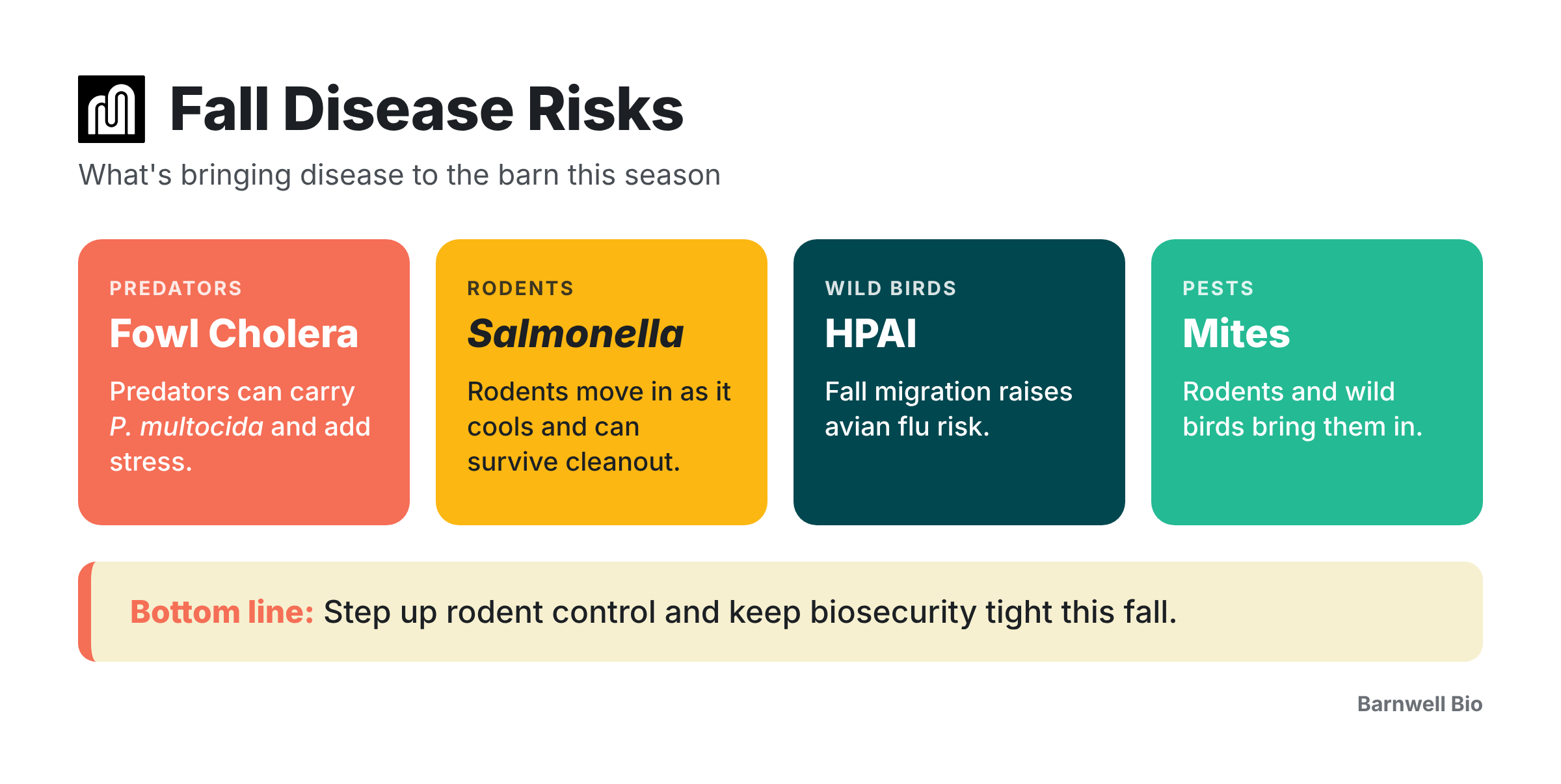
Predators carry P. multocida in their mouths.
The bacterium is part of the normal oral flora of felines, raccoons, opossums, and skunks, and a single bite or scratch can introduce it directly into tissue. Rodents can also carry P. multocida and spread it through contaminated feed, water, and litter, which is why a rise in rodent activity is worth paying attention to. Predator pressure alone, even without a kill, adds stress that can trigger outbreaks of a variety of pathogens.
Rodents keep Salmonella on the farm.
Rats and mice are well-documented reservoirs of Salmonella on poultry farms, and infected rodents can shed large numbers of bacteria in their droppings. Since rodents live in and around the house, they can survive cleanout and reintroduce Salmonella to the next flock. Fall rodent control is worth the extra attention as Salmonella can affect both regulatory testing and downstream product testing.
HPAI risk rises with fall migration.
Millions of ducks, geese, and other waterfowl move south along the Mississippi and Central flyways each fall, and they can shed avian influenza virus into ponds, fields, and the ground around poultry farms. Wild waterfowl remain the main source, but foxes, skunks, raccoons, and raptors that scavenge infected birds have also tested positive for H5N1. Predators and rodents moving around barns can carry contaminated material from the outside environment inside, putting flocks at potential risk.
Mites hitch a ride.
Rodents and wild birds can bring mites into houses, and northern fowl mite populations often build as the weather cools. One study of a commercial layer farm found that mites cut profits by 7 to 10 cents per hen over 10 weeks, “really illustrating how important these mites can be at key times during the production cycle,” said Amy Murillo, PhD, of UC Riverside (WATTPoultry).
If you’ve noticed predator or rodent activity around your barns, now is a good time to check for entry points, step up rodent control, and review your biosecurity program. Barnwell Bio’s environmental monitoring can show you whether those efforts are working. Regular boot-sock sampling tracks P. multocida, Salmonella, other stress-related pathogens, and mites in your barns over time. This can help you catch a rise early and act before it turns into a flock health problem. Your Barnwell dashboard alerts you to changes as they happen and shows how your farm compares to others. All of this information gives you and your veterinarian a clearer picture of where your biosecurity is holding and where it needs attention.
Reach out to our team, hello@barnwellbio.com, if you’d like to set up a monitoring plan or review your biosecurity protocol strategy.